


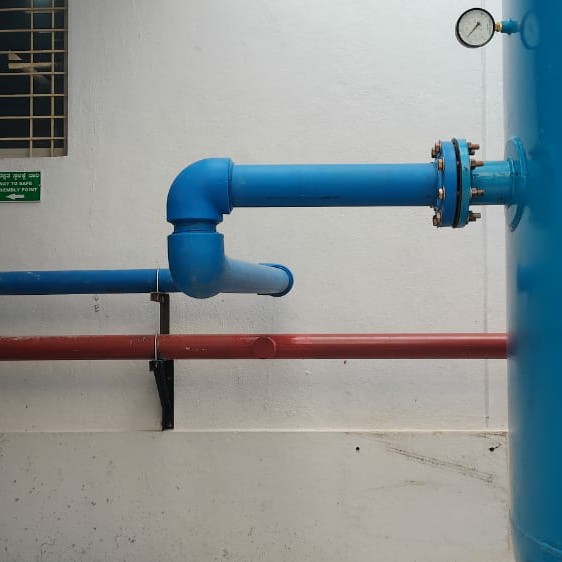
For a sugar factory, PPR (Polypropylene Random Copolymer) piping can be used for water distribution, hot water lines, chemical dosing systems (where compatible), utility services, and compressed air systems. Proper installation is important to ensure long service life and leak-free operation.
PPR Pipe Installation Guidelines for Sugar Factories
1. Planning and Design
Select pipe pressure rating (PN10, PN16, PN20, or PN25) based on operating pressure and temperature.
Consider thermal expansion in long pipe runs.
Provide adequate pipe supports and anchors.
2. Pipe Cutting
Use a dedicated PPR pipe cutter.
Ensure cuts are straight and burr-free.
3. Socket Fusion Welding
Clean pipe and fitting surfaces.
Heat both pipe and fitting using a calibrated fusion welding machine.
Follow the manufacturer's heating, insertion, and cooling times.
Do not rotate components during joining.
4. Support Spacing
Install pipe clamps at recommended intervals.
Reduce support spacing for hot water lines due to thermal expansion.
5. Thermal Expansion Management
Use expansion loops, offsets, or compensators on long runs.
Install fixed and sliding supports appropriately.
6. Pressure Testing
Fill the system slowly and remove trapped air.
Conduct hydrostatic pressure testing according to project specifications.
Inspect all joints for leaks.
7. Industrial Considerations in Sugar Plants
Protect pipes from direct mechanical damage near conveyors and processing equipment.
Avoid exposure to temperatures beyond PPR design limits.
Verify chemical compatibility before carrying process chemicals.
Use insulation for hot water and steam-adjacent applications.
Common Applications in Sugar Factories
Process water distribution
Boiler feed water auxiliary lines
Cooling water systems
Chemical dosing lines (compatible chemicals)
Compressed air networks
Domestic water supply systems
For a specific sugar factory application (process water, compressed air, hot water, or chemical line), I can provide detailed pipe sizing, support spacing, and welding parameters.


