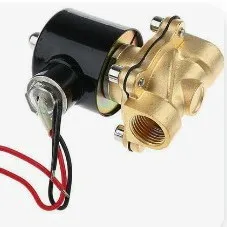
A solenoid valve is an electromechanical valve that uses an electric coil (solenoid) to control the flow of a liquid or gas.
How it works
The solenoid coil receives electrical power.
The energized coil creates a magnetic field.
The magnetic field pulls a plunger (armature) upward.
This opens or closes the valve orifice, allowing or stopping fluid flow.
When power is removed, a spring returns the plunger to its original position.
Main parts
Solenoid coil – Produces the magnetic field.
Plunger (armature) – Moves to open or close the valve.
Spring – Returns the plunger when power is off.
Valve body – Contains the fluid passage.
Seal/Diaphragm – Prevents leakage.
Types
Normally Closed (NC): Closed when not energized; opens when power is applied.
Normally Open (NO): Open when not energized; closes when power is applied.
Direct-acting: Operates directly from the solenoid; suitable for low-flow applications.
Pilot-operated: Uses system pressure to operate; suitable for higher flow rates.
Applications
Water purification systems
Irrigation systems
Pneumatic and hydraulic equipment
Refrigeration and air conditioning
Fuel and gas control
Industrial automation
Medical equipment
Advantages
Fast operation
Remote electrical control
Compact design
Reliable and easy to automate
Low maintenance
Disadvantages
Requires electrical power
Coil can overheat if improperly rated
Sensitive to dirt and debris
Flow and pressure limits depend on the valve design
In simple terms, a solenoid valve acts like an electrically controlled switch for fluid flow—when electricity is applied, it opens or closes the passage automatically.
Keywords