


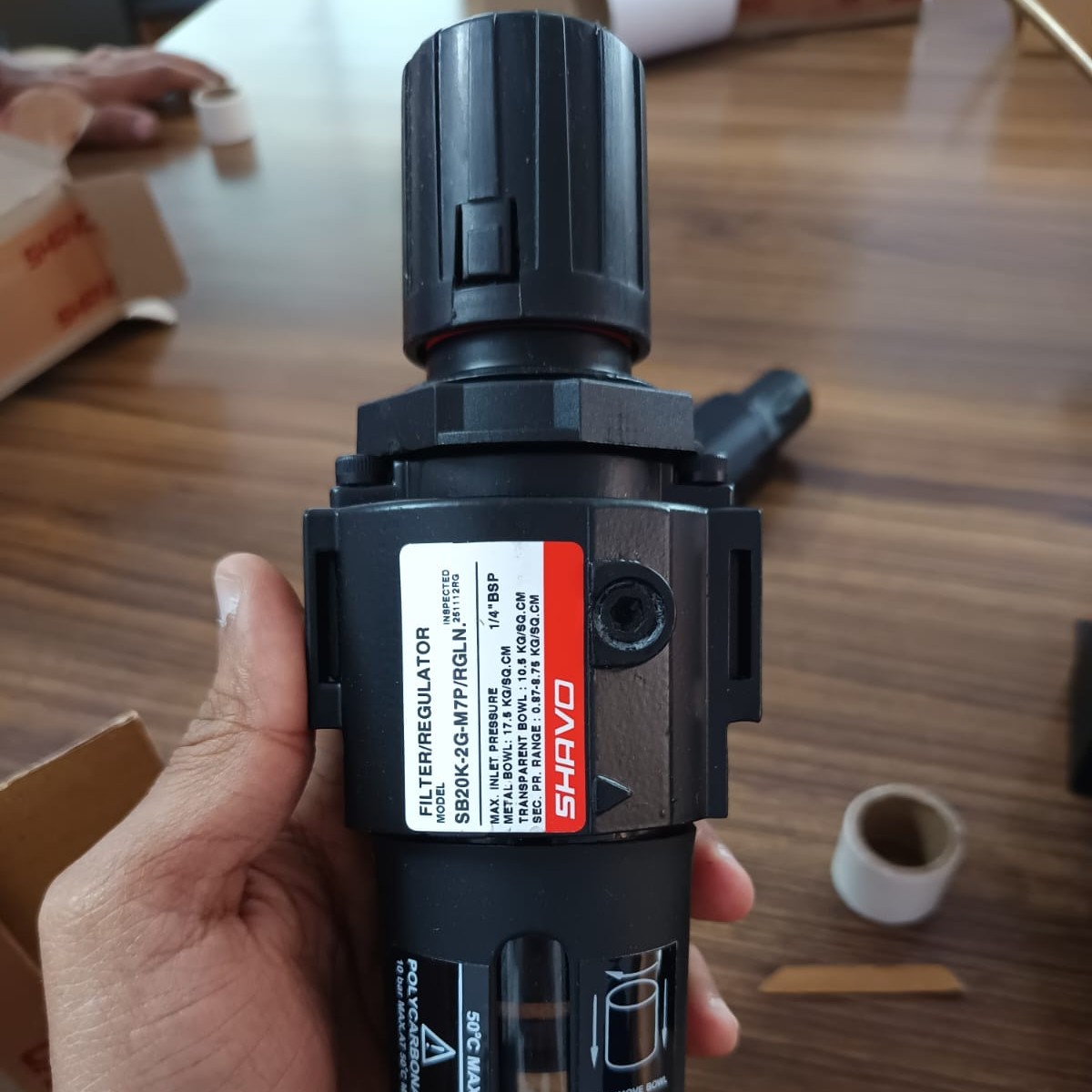
An air filter regulator (often called an FR unit) is a critical "two-in-one" component in pneumatic systems. It ensures that the air reaching your tools or machinery is clean, dry, and delivered at the correct pressure.
Think of it as the security guard and the traffic controller for your compressed air line.
What Does it Actually Do?
1. The Filter (The "Cleaner")
Compressed air is surprisingly dirty. It’s often filled with dust, pipe scale, and moisture. The filter:
Removes Contaminants: Uses a physical element (usually 5 to 40 microns) to trap particles.
Separates Water: Uses centrifugal force to sling water droplets to the bottom of the bowl.
Drainage: Most have a valve at the bottom (manual or automatic) to purge the collected "gunk."
2. The Regulator (The "Controller")
Air compressors usually store air at a high pressure (e.g., 125 PSI), but most tools are designed for lower pressure (e.g., 90 PSI). The regulator:
Standardizes Pressure: Keeps output steady even if the compressor’s tank pressure fluctuates.
Prevents Damage: Protects downstream equipment from being "blown out" by too much pressure.
Saves Energy: Using only the pressure you need reduces the load on your compressor.


